Big Walk Characters: Your Walker & Customization Guide
Last verified: August 5, 2026
Big Walk doesn't have a roster of named heroes — instead, every player controls one of the game's wonderfully simple little walker creatures. They have no names, no backstories and no stats. What they have is a surprisingly expressive toolkit of moves, a whole island to explore, and each other. Here's everything verified about the characters you'll play.
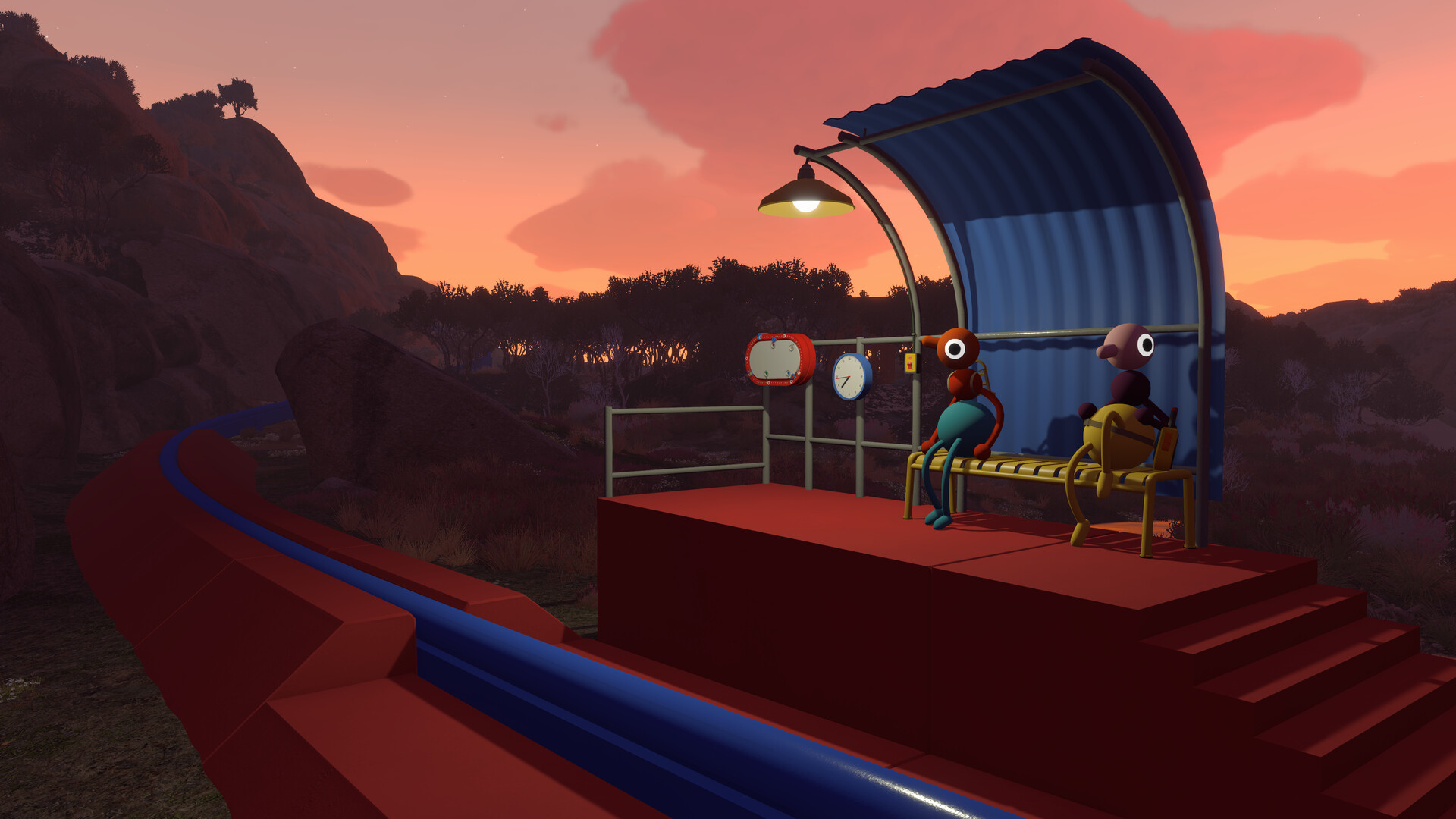
Small bodies, big personalities. That's the whole roster.
Who You Play As
You play as a small, colorful, vaguely egg-shaped walker — a "silly-looking character" in the words of critics, and one of the most charming avatars in recent memory. The game never names them; players have taken to calling them all sorts of things (GameSpot's family coined "Walklings"). What matters is how they look together: a line of mismatched little creatures marching across a pastel island is the game's whole visual identity.
House House's design language from Untitled Goose Game carries over — characters are simple shapes with enormous personality, readable from across a valley. At a distance, your group can identify each other by silhouette and color alone, which turns out to be essential gameplay: spotting your lost friend on a far ridge is a skill the island constantly rewards.
Character Abilities
The walker moveset is small, but every move matters:
- Walk, run, jump, crouch — the basics, all smooth and floaty. The walk itself is the game's central verb; the developers made sure it feels good for hours at a time.
- Sit down (legs crossed) — an emote that is, in practice, the game's punctuation mark. Sitting at a viewpoint with your friends is a legitimate activity, and the game is better for it.
- Pick up, carry and throw — you can carry objects, collectibles, tools… and other players. One walker can haul a friend up a cliff; two can lift someone together.
- Stack — crouch and let friends climb onto your shoulders. Two- and three-tall towers are the standard solution to "button too high".
- Dropkick and general chaos — you can kick things, steal balls and knock friends over. The game embraces goofing off; some of its best moments are pure playground anarchy.
- Gestures and body language — pointing, jumping in place and exaggerated movement form a physical vocabulary that groups rely on whenever voice chat fails.
Practice the three moves that solve the most puzzles before you leave the tutorial: carrying, stacking and sitting. If your group can build a two-player tower and carry each other up a cliff, half the island's puzzles are already solved.
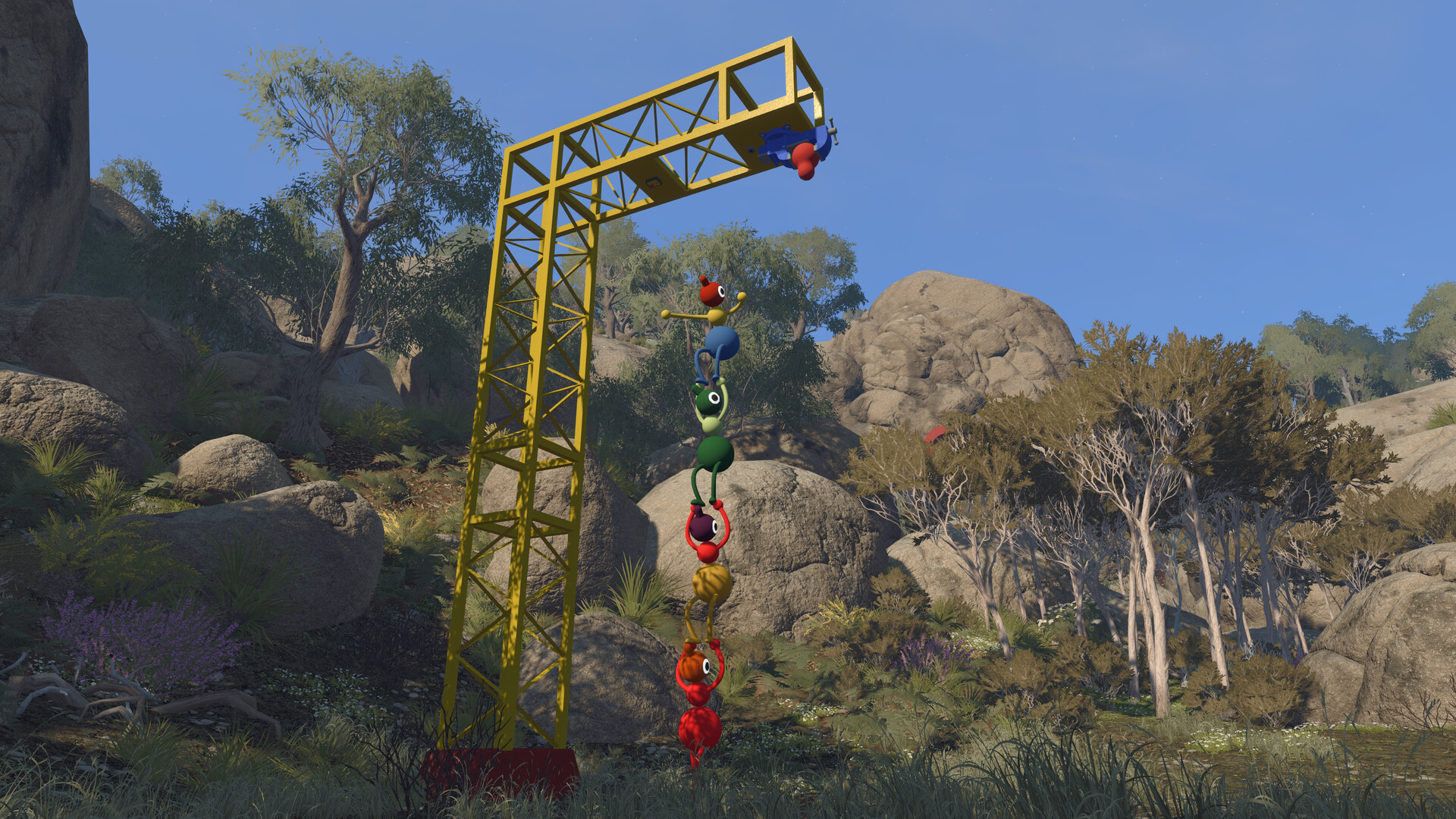
Your look is shaped in the world, not in a menu.
Customization
Big Walk's character customization is diegetic and delightful — you don't change your walker in a menu, you change it in the world:
- Painting each other. Early gameplay footage shows players painting each other bright colors — red, yellow and more — mid-session. Your walker's look is something your group shapes together, and getting "painted" is a social ritual, not a settings screen.
- Wearable items. Hats, hip items and other accessories exist in the world as physical objects. The "Big Help" achievement (wear something on your hip) confirms a hip-slot item system.
- The shiny treatment. The ultra-rare "Big Makeover" achievement — "Get shiny" — points to a deeper customization reward somewhere on the island. We're verifying exactly where and how; check back as this guide expands.
- Color Alternatives. For accessibility, the game includes color-alternative options so players with color blindness can still tell characters and elements apart.
Group Dynamics
Because there are no classes, no stats and no loadouts, every group of walkers is functionally identical — and that's the point. The "character" in Big Walk isn't on your screen; it's the group. Roles emerge organically and change constantly:
- The scout — the player who volunteers to trek across the island with a walkie-talkie half while everyone else stays at the machine.
- The map carrier — someone has to hold the paper map, and someone else has to take their backpack off when they need to read it.
- The caller — the player who describes symbol patterns and coordinates button releases. Often the group's best describer, not its best walker.
- The goofball — every group has one, and Big Walk is one of the few games where the goofball's antics are a feature. Knocking a friend into the ocean is canonically funny.
This is why the game refuses to name its characters: the moment the island gives you names, it takes away the joy of inventing your own. Most groups end up with a private vocabulary — for their characters, for the orbs, for landmarks — and that vocabulary is the game's character system.
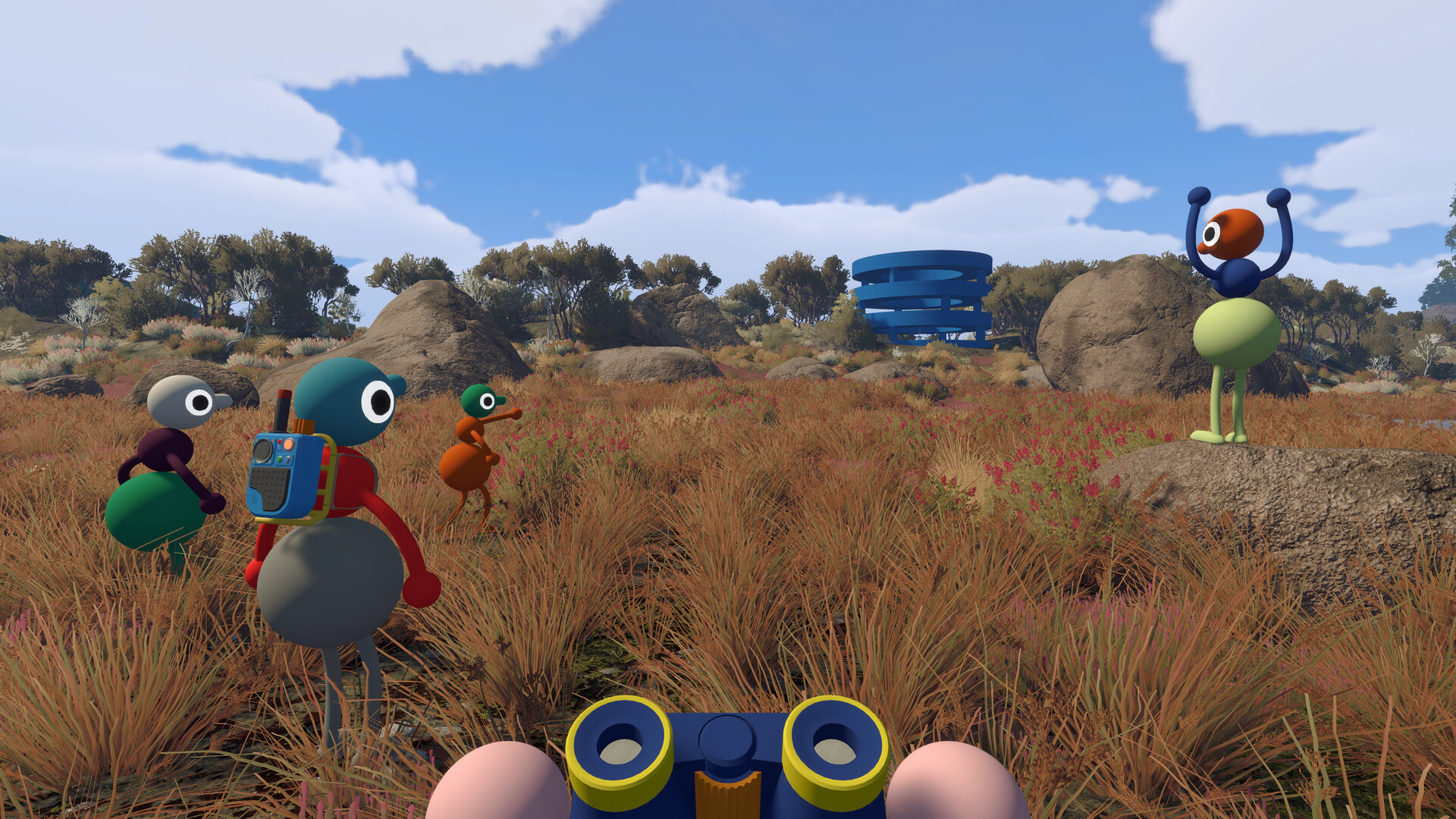
The island has a few mysteries left to meet.
The Island's Mysteries
One honest note: Big Walk's world contains figures and structures we're still verifying. Early trailers and gameplay hint at strange presences on the island — a massive black orb beyond an unreachable wall, odd silhouettes in the distance, and the question of whether your group is truly alone. We're documenting these as they're confirmed; check back regularly, or email support@big-walk.net if you've found something we haven't covered.
Related Guides
Meet your group's characters
Big Walk is out now on Steam, Mac App Store, PlayStation 5 and Switch 2. Bring your friends — they're the roster.